Watch The Terminal List S2 | Prime Video

Kundalini Reiki Self Healing

November 21, 2013

Kundalini
Kundalini
Image is courtesy of Riaz Padamsee

What is Kundalini?

Kundalini, in Sanskrit language means snake, is often described as a sleeping snake, that is being coiled up at the base of the spine, in the triangular shaped of coccyx (tailbone), in three and a half coils. Kundalini as a sleeping snake, is a dormant potential force, or a residual power of pure desire, in human body.

According to an ebook, Kundalini Reiki Manual by Paul Crick, healthypages forum moderator, kundalini means certain healing channels, and chakras have been opened, to gain access to the Earth's energy, as a part of universal energy.

Does it mean, kundalini should be awakened first? Yes, it does. We should awaken our root chakra (the energy centre) first, in order to feel our kundalini energy. But, Paul said in his ebook, that one can awaken his kundalini energy with patiently, by following his instruction.

If you have mastered on your sixth sense, just like I did, it will be easier for you, to feel your kundalini energy, by focussing your mind on your coccyx, the centre of kundalini energy.

What is Kundalini Yoga?

Based on a treatise by Sivananda Saraswati, in 1935, kundalini yoga, a school of yoga, was influenced by the tantra, and shakta schools of Hinduism. In kundalini yoga, the students are taught to focus on awakening the kundalini energy, through regular practice of meditation, pranayama yoga, chanting mantra, and yoga asana.

The aims of kundalini yoga, which called by the yoga practitioners as the yoga of awareness, is to cultivate the creative spiritual potential of a human to uphold values, speak the truth, focus on the compassion, and consciousness needed to serve, and heal others.

What is Reiki?

Reiki is a spiritual practice developed by Mikao Usui, a Japanese Buddhist, in 1922. Reiki healing technique is also called palm healing. A form of alternative medicine, by using Reiki practioners palms on the patients body.

Reiki practitioners believe that by using their palms, they are transferring universal energy of ki (qi, or chi).

Several translation are mentioned to describe the meaning of reiki. Some authors translate reiki as universal life energy. Reiki, in Japanese language derived from the words, rei (spirit, miraculous, divine), and ki (gas, vital energy, breath of life, consciousness). So, reiki means spiritual energy, vital energy, life force, or energy of life. But, there are also several translation of reiki such as, feeling of mystery, atmosphere of mystery, ethereal atmosphere, or spiritual presence.

What is The Difference Between Reiki and Kundalini Reiki?

Below I quote what Paul Crick said in healthypages forum:

Kundalini Reiki is not a form of Usui Reiki, it works with different energy, and the energy beings behind the modality are different, there are no symbols as the connection is direct.

The Kundalini Reiki treatments only take a few minutes to perform, there are no hand positions, you just put your hands on someones shoulders, and think Kundalini Reiki, you feel the energy start to flow, after a few minutes the energy will stop, and the treatment is finished.

This energy modality is simplicity itself to use and pass on, nothing complicated to get in the way of the energy flowing :-)

What is Kundalini Reiki?

In his ebook, Paul Crick described that, kundalini reiki is a simple form of healing and self development system, by opening, and strengthening the energy channel of the body, to direct the healing reiki energy to yourself and others, just by intention. Kundalini reiki was first coined by Ole Gabrielsen, a master of meditation.

Kundalini reiki is a direct result of Ole Gabrielsen many hours of Holy Communion with Master Kuthumi (Koot Hoomi), the Master Energies, the Chocan of the Second Ray, that is connected to crown chakra, and the temple of love, wisdom, and understanding.

The goal of kundalini activation leads to expand the state of universal consciousness, peace, light and love is not a future promise, but one of immediate possibility.

Scientific Perspectives

Reiki

There were several scientific studies to demonstrate the efficacy of reiki, in clinical practice. Several randomised clinical trials were searched using 23 databases from November 2007 until January 23, 2008. From 205 potentially relevant studies, the result only found nine randomised clinical trials, which met the inclusion criteria.

Two clinical trials suggested beneficial effects of reiki on depression. Overall, the study concluded that, the evidence is insufficient to suggest that reiki is an effective treatment for any conditions, and the value of reiki remains unproven. (Lee MS, et al. 2008)

Fibromyalgia, a condition of unknown cause characterized by chronic, diffuse pain, and tenderness to palpation at specific musculoskeletal sites. Fibromyalgia is the second most common rheumatologic condition after osteoarthritis, afflicting 2 to 4% of the general population.

A clinical trial was designed to investigate whether reiki is beneficial as an adjunctive treatment for fibromyalgia. The trial was conducted among 100 adults with fibromyalgia, in private medical offices, in Seattle, Washington, US.

Participants were devided into four groups, and randomly assigned to receive twice weekly treatment for 8 weeks, by either a reiki master, or an actor, to use direct touch, or distant reiki. The randomized controlled trial suggested that, adults with fibromyalgia are unlikely to benefit from reiki. (Assefi N, et al. 2008)

Kundalini

A study by Centre for Experimental Medicine and Surgery, Institute of Medical Sciences, Banaras Hindu University, Varanasi, India, found that, the practice of kundalini yoga helped to maintain a perfect homeostasis, and can be used as a non-medical measure, in treating patients with mental depression. The pulse rate, and blood pressure in patients are also lowered after practicing three, and six months of kundalini yoga. (Devi SK, et al. 1986)

An article by The Research Group for Mind-Body Dynamics, Institute for Nonlinear Science, University of California, San Diego, California, US, explained about kundalini yoga meditation techniques for psycho-oncology, and as potential therapies for cancer, in patient perspectives.

Some trials was showed efficacy on all psychological scales using the kundalini yoga protocol, in treating obsessive compulsive disorder (OCD), including anxiety, and depression, were also significantly reduced. Two depression specific kundalini yoga techniques are described in helping combat mental fatigue, and low energy.

There are also kundalini yoga techniques that yoga practitioners have used in treating cancer, as well as potential adjunctive therapies. A case history had presented rapid onset of acute relief from an intense fear, in a breast cancer patient using a kundalini yoga technique specific for fear.

Second case history in 1988, a surviving male diagnosed with terminal prostate cancer, who had used long term kundalini yoga therapy, as part of a self-directed integrative care approach. (Shannahoff-Khalsa DS. 2005)

Yoga practitioners perform meditations, in order to increase the awareness of internal body sensations. A study was designed to compare two groups of meditators, Tibetan Buddhist, and Kundalini, with non-meditators. Compared to non-meditators, meditators consistently rated their interoceptive performance as superior, and the difficulty of the task as easier.

The results was provided the evidence against the notion that practicing attention to internal body sensations, a core feature of meditation, will enhance the ability to sense the heartbeat at rest. (Khalsa SS, et al. 2008)

Conclusion:
From several studies above, I conclude that by self practicing reiki, or kundalini yoga might gain better result in health achievement, and more effective, than only being an energy receiver from reiki, or kundalini yoga practitioners.

Personal Perspectives

In my own experiences, my wife turns out that, she had already known about awakening kundalini energy, although she never heard about the term of kundalini before. In my previous post, which titled, Afterlife, I described how my wife had her sixth sense be opened.

The therapist, who I thought was also a paranormal, who was trying to unlock my wife's, and her two colleagues's aura, explained to my wife about the centre energy in human tailbone. The therapist did not mention anything to my wife, and her two colleagues about kundalini energy.

The therapist only told to my wife, who became the only one who succeeded in unlocking the aura, to feel the energy that flew from her tailbone, raised up to her head, and then to her hands. My wife then felt that the energy was stopped, in all her fingertips, like an electric wave.

I was surprised that my wife knew about this before, although she never heard about kundalini before. I had also felt my kundalini energy, after I knew where the source of kundalini was located in my body. It is easy for me, because I had also my sixth sense be opened, and also with my first daughter, who had her sixth sense since birth.

The first time I explained about kundalini energy to my seven years old daughter, she did not even believe with what I was saying. I said to my daughter, You could also feel your kundalini energy, just think about the energy, which is hidden in your tailbone!

Watch this and feel it!, I put my left palm, about 10 cm in front of my daughter's face. There is hot air comes from your palm, Dad, said my daughter.

You could also do it too! Just think on your tailbone!, I said to her. But not by putting your hand in your ass. Just think about the energy! Feel the energy raised up to your head! You will feel your head is tickel and bigger. And then the energy stops in your fingertips, as you also felt tickel in your fingertips, I added.

You are right, Dad. Hi..hi..hi, said my daughter while trying to hold her laugh. I felt my daughter's kundalini energy. I never thought that I could also teach my own daughter to feel her kundalini energy, although I am not reiki, or yoga practitioner.


Note:
If you want to read, or download the ebook Kundalini Reiki Manual by Paul Crick, just google it! You can also email me if you want, or by placing your email in the comment form below. I will email you the 24 pages ebook, in which only 238 kB in size.

Why Women Are More Likely To Suffer Osteoporosis Than Men

November 12, 2013

Chinese_hunchback_woman
A Chinese hunchback woman
Image is courtesy of zhee

Osteoporosis, a silent disease of decreased in bone mass and density, in which the bones become weak, and lead to an increased risk of fracture incident (break bones), especially in the hip, spine, and wrist. Fracture incidents due to osteoporosis, will occur in healthy people, who would not normally break a bone, in both men and women.

According to Nicholas Perricone, M.D.'s book, 7 Secrets to Beauty, Health & Longevity, page 72, there are several unsupported claims, that women are much more likely to suffer from osteoporosis than men. Below I found several studies in Pubmed to explain dr. Perricone's following claims:

Claim: Women have less bone mass than men.

Fact:
True indeed. Compare to women, men is given larger bone size, and greater bone area at all sites. But, according to a study, there is virtually no clinical difference, in bone mineral density (BMD) precision between men and women.

BMD, the amount of mineral per square centimeter of bone, is an important predictor for osteoporosis. The actual BMD, which is usually expressed in grams per milliliter, is measured by X-Ray Absorptiometry, or Tomography. (MeSH)

Recent study by University of Wisconsin Osteoporosis Clinical Research Program, Madison, WI, USA, compared BMD precision, in 180 older men and women, by using a Lunar iDXA densitometer. The study resulted that there is virtually no clinical difference, in BMD precision between men and women. (Krueger D, et al. 2013)

Claim: Women tend to live longer than men.

Fact:
Totally true, but I found no link between extended lifespan with osteoporosis.

According to recent article by The Institute of Healthy Ageing, London, UK, sex differences in lifespan exist worldwide, with women outliving men, by more than a decade in some countries. Although most sexually reproducing species examined had shown sex differences, in patterns of ageing, but a comprehensive explanation does not exist.

The sex steroids, such as androgens and oestrogens, were examined their regulation of biological processes, that can affect ageing and lifespan. The sexes, in which able to respond differently to dietary restriction, and to alter the activity of nutrient sensing pathways, had come up with the conclusion that females was showing a greater capability for extending life. (Regan JC, et al. 2013)

Claim: Women usually consume less calcium than men.

Fact:
The statement is doubtful and unclear.

Healthy diet with a sufficient intake of calcium, and vitamin D will help making the bones strong. People are usually having less than half the calcium, and vitamin D they need. The food sources of calcium include, low fat milk, yogurt, cheese, orange juice, cereals, and breads.

In my previous post, which titled, Dietary Intake of Vitamin D Against Diabetes and Cancer, I had also mentioned two studies, in relating to vitamin D, calcium, and fracture incidence.

A study had resulted that four monthly supplementation, with 100,000 IU oral vitamin D, may prevent fractures without adverse effects in men and women. However, another trial did not support the calcium, and vitamin D supplementation, either alone, or in combination, for the prevention of fractures in elderly people.

Recent study by 1 Institute for Aging Research, Boston, MA, USA, suggested that greater protein intake benefits women especially those with lower calcium intakes. But, protein effects are not significant for short term changes in bone density. In the contrary, in men, higher protein intakes lead to greater bone loss. (Sahni S, et al. 2013)

According to a study by Department of Public Health Medicine, Graduate School of Comprehensive Human Sciences, University of Tsukuba, Ibaraki, Japan, among 46,465 men, and 64,327 women, aged 40-79 years, who responded to the self administered food frequency questionnaire, men aged 40-49 years had the lowest mean intake levels of calcium, with other vitamins and minerals. While in women aged 70-79 years, had the lowest mean intake levels of calcium, retinol, and vitamins A. (Iso H, et al. 2005) There are not enough studies to support dr. Perricone's claim.

Claim: The rate of bone loss accelerates after menopause, because the female hormone estrogen is needed to keep the bones strong.

Fact:
True indeed. Postmenopausal osteoporosis is a condition associated with low bone mass, resulting from the increased bone resorption, that occurs following a decline in estrogen levels. (Lagari VS, et al. 2013)

Claim: If a woman's ovaries are surgically removed, more rapid bone loss may occur, because estrogen is made in the ovaries.

Fact:
Totally true. Bilateral oophorectomy (ovariectomy, the surgical removal of both ovaries, resulting in surgical menopause) at the time of hysterectomy (a surgical operation to remove all, or part of the uterus) for benign disease, is commonly practiced, in order to prevent the subsequent development of ovarian cancer, or other ovarian pathology, that might require additional surgery.

Estrogen deficiency resulting from pre-menopausal, and post-menopausal oophorectomies, has been associated with higher risks of coronary heart disease, stroke, hip fracture, Parkinsonism, dementia, cognitive impairment, depression and anxiety, in many studies. Nowadays, observational studies suggest, that bilateral oophorectomy may do more harm than good. In women who are not at high risk of developing ovarian, or breast cancer, removing the ovaries at the time of hysterectomy should be approached with caution. (Parker WH, et al. 2009)

Conclusion: Women are much more likely to suffer from osteoporosis than men.

Osteoporosis Risk Factors

According to NIH, there are many risk factors, which can lead to bone loss, and osteoporosis. Several risk factors, you cannot change, but others you can. The following are risk factors you cannot change:

Gender
Women are much more likely to suffer from osteoporosis than men.

Age
The older you are, the greater your risk of osteoporosis.

Body size
Small, thin women are at greater risk of osteoporosis.

Ethnicity
White, Caucasian and Asian women are at highest risk. Black and Hispanic women have a lower risk.

Family history
Osteoporosis tends to run in families. If a family member has osteoporosis, or breaks a bone, there is a greater chance that you will too.

Other risk factors, which you can avoid includes:

Sex hormones
Low estrogen levels due to missing menstrual periods, or having menopause can cause osteoporosis, in women. Low testosterone levels can bring on osteoporosis, in men.

Anorexia nervosa
An eating disorder which can lead to osteoporosis.

Calcium and vitamin D intake
Diet low in calcium and vitamin D, will make you more prone to bone loss.

Activity level
Lack of exercise, or long term bed rest can cause weak bones.

Cigarettes smoking
Smoking impairs muscle, bone, and joint health.

Excessive use of alcohol
Drinking too much alcohol can cause bone loss, and broken bones.

Medication use
Using certain medications to treat rheumatoid arthritis, endocrine disorders, seizure disorders, and gastrointestinal diseases, may have side effects which can damage bone, and lead to osteoporosis.

In his book, dr. Perricone said that glucocorticoids, a class of drugs, a group of steroids, which have metabolic and anti inflammatory effects, have particularly damaging effects on the skeleton.

The following drugs also can cause bone loss:

  • Thyroid hormones.
  • Anticonvulsants.
  • Antacids containing aluminium.
  • Gonadrotopin releasing hormones, used for treatment of endometriosis.
  • Methotrexate, used for cancer treatment.
  • Cyclosporine A, an immunosuppresive drug.
  • Heparin and cholestyramine, used for controlling blood cholesterol levels.


Dr. Perricone's 7 Secrets to Beauty, Health, and Longevity: The Miracle of Cellular Rejuvenation by Nicholas Perricone, M.D.

From The Bitter Taste of Bratawali

November 07, 2013

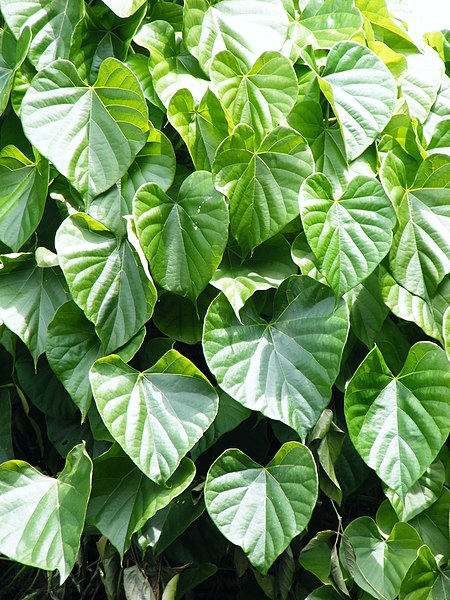
Tinospora cordifolia
Bratawali (Tinospora cordifolia)
Image from Wikimedia.org

Bratawali (Tinospora cordifolia) is a well known plant in Indonesia. Bratawali is often used as jamu paitan, or Javanese traditional herbal drink, which has a bitter taste. When making jamu paitan, the stems extract of bratawali, is often mixed with mint leaves.

Common bratawali names include, brotowali, putrawali, daun gadel (Javanese), andawali (Sundanese), antawali (Balinese), shen jin teng, kuan jin teng (Chinese), guduchi, guluchi, amritavalli, amrta, cinnodbhava, gulvel (India). Bratawali is common used in Ayurvedic, and Traditional Chinese Medicine (TCM), as a herbal remedy.

The Javanese's jamu paitan makers often promote bratawali, as a herbal remedy for lowering the risk of having diabetes, and also as a blood cleansing agent. Below are some studies which demonstrated the effects of bratawali.

Animal Studies

Study by Department of Anatomy, Faculty of Medicine, Universiti Kebangsaan Malaysia, Kuala Lumpur, Malaysia, was conducted to determine the effect of ethanolic extract of the dried stems of bratawali, in a male rat model of hepatic fibrosis, caused by the hepatotoxin, thioacetamide.

The results showed a significant increase in the activity of liver enzymes, bilirubin and G-glutamyl transferase and gross. The histopathological changes were also determined. (Kadir FA, et al. 2011)

Diabetes mellitus often leads to disability from vascular complications and neurological complications. A study by Institute of Pharmacology, College of Medicine, National Taiwan University, Taipei, Taiwan, was investigated the hypoglycemic actions of borapetoside C isolated from bratawali.

Three groups of mice were used in the study, normal mice, type 1 diabetes mellitus mice, and type 2 diabetes mellitus mice. Overall, the study proved that borapetoside C can increase glucose utilization, delayed the development of insulin resistance and enhanced insulin sensitivity.

The activation of IR-Akt-GLUT2 expression, and the enhancement of insulin sensitivity, may contribute to the hypoglycemic action of borapetoside C, in diabetic mice. (Ruan CT, et al. 2012)

Recent follow up study by Ruan CT, et al. aimed to explore the hypoglycemic effects of borapetoside A, the most active diterpenoid among others (borapetosides B, and C), which isolated from the ethanol extract of bratawali.

The study resulted that borapetoside A was shown to increase the glycogen content and decrease the plasma glucose concentration, in a concentration, or dose-dependent manner, both in vitro, and in vivo.

The hypoglycemic effects in the normal mice, and the mice with type 2 diabetes mellitus were associated with the increases of the plasma insulin levels. But, the insulin levels remained unchanged in the mice with type 1 diabetes mellitus. (Ruan CT, et al. 2013)

A study by Department of Physiology, Faculty of Science, Prince of Songkla University, Hat-Yai, Songkhla, Thailand, was aimed to identify the active components of bratawali extract, and to investigate the mechanisms of the actions, on blood pressure, and heart rate, in anesthetized rats.

Five active compounds, adenosine, uridine, salsolinol, higenamine, and tyramine, which were isolated from bratawali, acted in concert on the cardiovascular system of anesthetized rats. (Praman S, et al. 2012)

Follow up study by Praman S, et al. resulted that bratawali extract caused an increase in the force of contraction of the electrical field stimulated left atrium. The study concluded that crude extracts of bratawali exert a positive inotropic effect, on the electrical field stimulated isolated left atria.

The results were also from the concerted actions of five bratawali bioactive compounds: higenamine, salsolinol, tyramine, adenosine and uridine. (Praman S, et al. 2013)

Human Study

Although several studies using rats or mice were successfully, but not in human study. So far, I only managed to find a study by Department of Medicine, Ramathibodi Hospital, Faculty of Medicine, Mahidol University, Bangkok, Thailand. The study aimed to determine the effects of bratawali on serum glucose, and insulin levels, in healthy subjects, and patients with type 2 diabetes mellitus.

Serum from ten healthy subjects, and ten diabetic participants, who had fasted overnight. The serums were obtained every 30 to 60 minutes during the 3 hours of continued fasting, and during the 3 hours after ingestion of 75g of glucose. With or without ingestion of 125g, or 250g of bratawali dry powder capsule. Glucose, and insulin levels were analyzed. The areas under the curve for mean serum glucose, and insulin levels, were also calculated.

Both healthy and diabetic participants were not significantly different between with, or without bratawali dry powder capsule. The results suggested that bratawali ingestion cannot affect serum glucose, and insulin levels, in healthy subjects, or patients with type 2 diabetes mellitus. (Klangjareonchai T, et al. 2012)

Further studies using human subjects are needed to give more valuable information, in regarding the health benefits of bratawali.


biXa Guduchi Powder Sandhu's Guduchi
 

Translate This Blog

Sponsored Ads

Dnox's Crafter

Sentia Spirits GABA - Botanical Food Supplement

Hairmax® PowerFlex 272 Laser Cap Hair Growth Device

Sustain Me by Barbara O’Neill

Murder by Injection: The Story of the Medical Conspiracy Against America by Eustace Clarence Mullins

The Big Bamboozle: 9/11 and the War on Terror by Philip Marshall

Want to start a new career as a quality assurance software tester? Join the greatest community of testers!
Learn. Earn. Connect.

Ready to become a freelance tester?
Work from anywhere!

Get paid for your opinion
Give brands a piece of your mind!

TheraICE Migraine Relief Cap

Eclat Vitamin C Face Serum

Earn money with Clickworker

Followers

About Me

My photo
" Let us not waste our health to look for treasure and then squandered our treasure to seek health " - Verdi

Web Statistics


Get your own flagcounter!

free counters

free counters

Project Hail Mary by Andy Weir

Why a Son Needs a Mom by Gregory E. Lang

Theo of Golden by Allen Levi

Misty Sunset & Tree Plant Picture

The Nightingale by Kristin Hannah

A Little Life by Hanya Yanagihara

ITO EN Oi Ocha Green Tea - Tea Bags 40ct

Minyak Kayu Putih Cap Lang

Get 20% Off on all products use coupon code: AFF20