Watch Reacher - Season 4 (2026) on amazon Prime!

Showing posts with label benefits. Show all posts

Health Benefits of Honey

November 08, 2024

honey
Honey

Nutritional Healthy

Honey, a nutritional healthy product, is produced mainly by two types of bees: honey bee and stingless bee, has been recognized for its medicinal properties for thousands of years. Meanwhile, An essential pollinator of our food crops is the honey bee. Honey bee pollination contributes either directly or indirectly to nearly one-third of our food supply.

Nutritional value per 1 tablespoon (21 g)

NutrientsAmountNutrientsAmount
Water3.59 gCalories64 kcal
Energy267 kJProtein0.06 g
Ash0.04 gCarbohydrate17.30 g
Sugars17.25 gSucrose0.19 g
Glucose7.51 gFructose8.60 g
Maltose0.30 gGalactose0.65 g
Calcium, Ca1 mgIron, Fe0.09 mg
Phosphorus, P1 mgPotassium, K11 mg
Sodium, Na1 mgZinc, Zn0.05 mg
Copper, Cu0.008 mgManganese, Mn0.017 mg
Selenium, Se0.2 µgFluoride, F1.5 µg
Vitamin C0.1 mgRiboflavin0.008 mg
Niacin0.025 mgPantothenic acid0.014 mg
Vitamin B60.005 mgCholine0.5 mg
Betaine0.4 mg

USDA

Products from honeybees, like honey, propolis, and royal jelly, are not only food but also provide significant health advantages against a variety of illnesses. Honey's possible health advantages are discussed, including its effects on other diseases, wound healing, and microbial suppression.

Numerous health advantages associated with gastrointestinal illnesses, allergies, and issues linked to gynecology, oral health, and dermatology have been described for propolis. The preventive properties of royal jelly on wound healing, aging, neurological diseases, and reproductive health are widely recognized.

The ancient Egyptians, Greeks, Romans, and Chinese all utilized honey to treat gastric ulcers and other intestinal lesions. Additionally, it has been used to treat earaches, sore throats, and coughs. Lotus honey has been used traditionally to heal eye infections and other ailments since ancient India.

Honey is utilized both externally and internally as a functional food to support the body's vital organs by supplying energy and nutrients. The quality of honey is significantly influenced by its active ingredients, which include organic acids, glucose, fructose, flavonoids, and polyphenols.

Biological Activities of Honey

Biological activities of honey

Honey has long been used to heal burns, wounds, insect bites, skin conditions, boils, and ulcers. Honey's effectiveness as an antibacterial and wound-healing agent is confirmed by scientific evidence of its wound-healing properties. The proteolytic enzyme is dynamically expressed when honey stimulates the wound matrix's latent plasminogen to become active. Plasmin destroys fibrin and causes blood clots to retreat. This enzyme breaks down fibrin clumps in the wound bed that have dead tissues adhering to them.

Clinical data demonstrating honey's efficacy, specificity, and sensitivity in wound treatment shows that honey works better than both traditional and contemporary wound care dressings. Fast healing, wound cleansing, infection removal, tissue regeneration, reduced inflammation, and improved dressing comfort because of less tissue adhesion are among the therapeutic benefits seen following honey administration.

365 by Whole Foods Market, Organic Light Amber Wildflower Honey
365 by Whole Foods Market, Organic Light Amber Wildflower Honey.

Honey also improves the epithelialization of the affected skin surface, which helps to reduce skin deterioration around stomas like ileostomy and colostomy. Honey helps with psoriasis, eczema, and pediatric dermatitis brought on by overuse of diapers and napkins. Researchers looked into how honey combined with beeswax and olive oil affected those who had atopic dermatitis or psoriasis.

According to a clinical trial, a honey-based mixture produced notable gains and was incredibly well tolerated. Numerous nitric oxide metabolites found in honey lower the risk of skin infections in people with psoriasis.

Enzymes that aid in the absorption of substances like sugars and starches make up natural honey. Honey contains sugar molecules that are easily absorbed by the body. Honey contains minerals, phytochemicals, and flavonoids that promote digestion.

Honey is utilized in wound management and is useful for patients with locally infected wounds, diabetic foot ulcers, Charcot foot ulcerations, and complex comorbid disorders that have failed hospital treatment. Additionally, the presence of honey results in low damage to the wound bed and great tolerability.

MANUKA DOCTOR - Raw Manuka Honey MGO 30+ SQUEEZY, 100% Pure New Zealand Honey
MANUKA DOCTOR - Raw Manuka Honey MGO 30+ SQUEEZY, 100% Pure New Zealand Honey.

Honey can be used to treat a variety of oral disorders, including periodontal disease, stomatitis, and halitosis. Furthermore, it has been used to prevent periodontitis, gingivitis, mouth ulcers, and dental plaque. Honey's antibacterial and anti-inflammatory qualities can promote granulation tissue formation, which will help damaged cells heal.

Gastroesophageal reflux disease (GERD)
A mucosal infection caused by aberrant stomach reflux into the esophagus or lungs. Acid regurgitation, irritation, and heartburn are signs of GERD. Honey helps with this illness by covering the lining of the stomach and esophagus, which stops food and gastric juice from flowing upward. In order to aid in the regeneration of the sphincter's tissues and ultimately lessen the likelihood of acid reflux, honey might further stimulate them.

Dyspepsia
A chronic condition in which the gastrointestinal organs, primarily the stomach and first part of the small intestine, function improperly. It is a condition that manifests as nausea, bloating, heartburn, and epigastric pain.

According to clinical studies, honey enhanced the healing effect and reduced the production of stomach acid. Because of its antimicrobial qualities and preventive effects, honey is therefore consumed as a nutritional supplement.

Gastroenteritis
Often known as stomach or gastric flu, is characterized by inflammation of the digestive tract. Foodborne, waterborne, and person-to-person transmission of infectious pathogens could be the cause of this illness. Gastric pains, bloating, watery diarrhea, dehydration, and nausea are all signs of gastroenteritis.

According to a clinical trial, honey can be used to treat infantile gastroenteritis. Because honey's high sugar content promotes electrolyte and water reabsorption in the gut, the study discovered that substituting honey for the glucose in the usual electrolyte oral rehydration solution shortened the recovery period for gastroenteritis patients.

Nate's 100% Pure, Raw & Unfiltered Honey
Nate's 100% Pure, Raw & Unfiltered Honey.

Chronic constipation
A frequent and multifaceted disorder marked by painful defecation (irregular stools and difficult stool passage). Symptoms of difficult stool passage include lumpy or hard stools, a feeling of incomplete evacuation, straining, and a prolonged time to pass stool. A excessive number of bowel movements with watery stool is called diarrhea. Compared to traditional antiviral treatment, honey has reduced the pathophysiology and duration of viral diarrhea.

Honey can relieve pain, normalize hepatic processes, and eliminate poisons. The cause of hepatic system complications is oxidative damage. Honey may help heal damaged livers since it has antioxidant properties. Heart problems and vasomotor dysfunctions brought on by adrenaline can be prevented and treated with natural wild honey.

The use of honey was found to significantly lower the risk factors for cardiovascular and metabolic disorders. Vasoprotective benefits of honey include vasodilation, vascular homeostasis balance, and lipid profile improvements. Honey's flavonoids boost high-density lipoproteins (HDL), inhibit oxidation of low-density lipoproteins (LDL), improve endothelial activities, diminish platelets' capacity to form clots, and promote coronary vasodilation. (Pasupuleti VR et al. 2017)

100% Pure New Zealand Manuka Honey
100% Pure New Zealand Manuka Honey.

Health Benefits of Cincau

December 23, 2013

Black cincau (black grass jelly)
Image from wikimedia

Cincau, an Indonesian famous ingredient commonly used for beverages, turns out to have many health benefits. Other common names of cincau, include, grass jelly (English), khruea ma noi, chao kuai (Thailand), cao, juju, kepleng (Javanese), camcauh, tahulu (Sundanese), xian cao, hsian tsao (Taiwan).

Cincau is made traditionally by first washing the leaves, finely crushed, and added with warm water. The water soluble is then separated from the leaves, left until it is cold, and turned into a jelly.

It might also simply by soaking the leaves into water, for about five minutes, and then squeeze them. The leaves will stick together like glues. The more sticky means better quality of Cincau leaves.

Moreover, the gel content in cincau, is affected by the altitude. The highest content of the gel is found in the leaves, which are planted at minimum of 2000 meters asl. (Widyaningsih TD, et al. 2012)

According to Kooiman P, 2006, the solubility of such a pure, and highly esterified pectin, from cincau plant cell walls, in cold water, seems to occur only in a restricted number of plant species.

Different varieties of cincau, whether they are derived from the leaves of Mesona palustris, Mesona chinensis, Mesona procumbens, or Cyclea barbata, all them possess the same health benefits.

Cyclea barbata Miers
Cyclea barbata Miers.

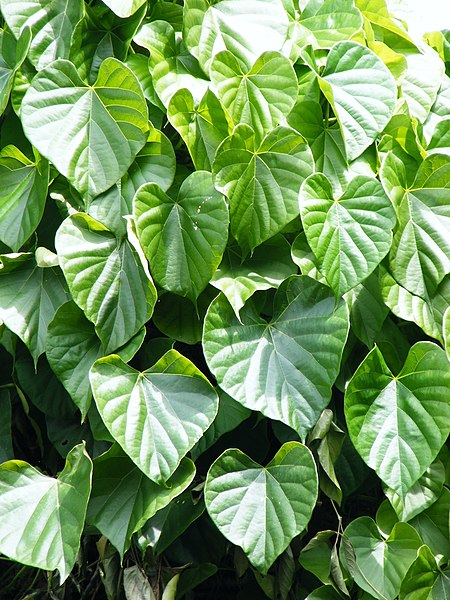
Green cincau is made from the leaves of Cyclea barbata, in which is reported to be originated from Silent Valley, Kerala, India. Cyclea barbata is commonly used, as a medicinal plant by Javanese people, for stomach troubles, and as a prophylactic against fever. (Manilal KS, et al. 1985)

Five bisbenzylisoquinoline alkaloids, in which among them, tetrandrine, limacine, thalrugosine, homoaromoline, and cycleapeltine, were extracted from the roots of Cyclea barbata, had demonstrated cytotoxic, and antimalarial activities. (Lin LZ, et al. 1993)

Mesona palustris
Mesona palustris
Image from sito

Black cincau is made from the leaves of Mesona palustris, or other Mesona family plants. Black cincau has been reported to possess antioxidant, antibacterial, antimutagenic, hepatoprotective, antihypertensive, antidiabetic, immunomodulatory and cancer preventive properties. Black cincau is believed can be used to treat fever, abdominal pain, diarrhea, cough, mouth sores, high blood pressure, diabetes and liver disease.

Recent study was aimed to demonstrate the immunomodulatory property of a black cincau, in a form of instant tea powder, using Salmonella thypimurium induced mice. The beverage, in which was added with cinnamon and pandan leaves extracts, had the ability to increase interferon gamma (IFN-γ), and immunoglobulin G (IgG), in Salmonella thypimurium induced mice, at dose of 18,2 mg/20 g body weight, and 36,4 mg/20 g body weight. (Widyaningsih TD, et al. 2013)

Black cincau, which is tasteless in nature, is easily found to be sold, whether in a traditional market, or in a supermarket. Even though cincau beverages possess many health benefits, but another ingredients to make cincau beverages more tasty, might be questionable for health.

The use of sugar in a large amount, or artificial sweetener that is used by traditional cincau beverages seller, will make cincau no longer healthier. Even worse, if the seller made his own cincau, by adding the soluble water of the leaves with borax, to make it more gummy, and lasts longer to be sold.


Ding Fong Black Grass Jelly Powder Nutrijel Jelly Powder Rasa Cincau (Pack of 6)


Related articles:

From The Bitter Taste of Bratawali

November 07, 2013

Tinospora cordifolia
Bratawali (Tinospora cordifolia)
Image from Wikimedia.org

Bratawali (Tinospora cordifolia) is a well known plant in Indonesia. Bratawali is often used as jamu paitan, or Javanese traditional herbal drink, which has a bitter taste. When making jamu paitan, the stems extract of bratawali, is often mixed with mint leaves.

Common bratawali names include, brotowali, putrawali, daun gadel (Javanese), andawali (Sundanese), antawali (Balinese), shen jin teng, kuan jin teng (Chinese), guduchi, guluchi, amritavalli, amrta, cinnodbhava, gulvel (India). Bratawali is common used in Ayurvedic, and Traditional Chinese Medicine (TCM), as a herbal remedy.

The Javanese's jamu paitan makers often promote bratawali, as a herbal remedy for lowering the risk of having diabetes, and also as a blood cleansing agent. Below are some studies which demonstrated the effects of bratawali.

Animal Studies

Study by Department of Anatomy, Faculty of Medicine, Universiti Kebangsaan Malaysia, Kuala Lumpur, Malaysia, was conducted to determine the effect of ethanolic extract of the dried stems of bratawali, in a male rat model of hepatic fibrosis, caused by the hepatotoxin, thioacetamide.

The results showed a significant increase in the activity of liver enzymes, bilirubin and G-glutamyl transferase and gross. The histopathological changes were also determined. (Kadir FA, et al. 2011)

Diabetes mellitus often leads to disability from vascular complications and neurological complications. A study by Institute of Pharmacology, College of Medicine, National Taiwan University, Taipei, Taiwan, was investigated the hypoglycemic actions of borapetoside C isolated from bratawali.

Three groups of mice were used in the study, normal mice, type 1 diabetes mellitus mice, and type 2 diabetes mellitus mice. Overall, the study proved that borapetoside C can increase glucose utilization, delayed the development of insulin resistance and enhanced insulin sensitivity.

The activation of IR-Akt-GLUT2 expression, and the enhancement of insulin sensitivity, may contribute to the hypoglycemic action of borapetoside C, in diabetic mice. (Ruan CT, et al. 2012)

Recent follow up study by Ruan CT, et al. aimed to explore the hypoglycemic effects of borapetoside A, the most active diterpenoid among others (borapetosides B, and C), which isolated from the ethanol extract of bratawali.

The study resulted that borapetoside A was shown to increase the glycogen content and decrease the plasma glucose concentration, in a concentration, or dose-dependent manner, both in vitro, and in vivo.

The hypoglycemic effects in the normal mice, and the mice with type 2 diabetes mellitus were associated with the increases of the plasma insulin levels. But, the insulin levels remained unchanged in the mice with type 1 diabetes mellitus. (Ruan CT, et al. 2013)

A study by Department of Physiology, Faculty of Science, Prince of Songkla University, Hat-Yai, Songkhla, Thailand, was aimed to identify the active components of bratawali extract, and to investigate the mechanisms of the actions, on blood pressure, and heart rate, in anesthetized rats.

Five active compounds, adenosine, uridine, salsolinol, higenamine, and tyramine, which were isolated from bratawali, acted in concert on the cardiovascular system of anesthetized rats. (Praman S, et al. 2012)

Follow up study by Praman S, et al. resulted that bratawali extract caused an increase in the force of contraction of the electrical field stimulated left atrium. The study concluded that crude extracts of bratawali exert a positive inotropic effect, on the electrical field stimulated isolated left atria.

The results were also from the concerted actions of five bratawali bioactive compounds: higenamine, salsolinol, tyramine, adenosine and uridine. (Praman S, et al. 2013)

Human Study

Although several studies using rats or mice were successfully, but not in human study. So far, I only managed to find a study by Department of Medicine, Ramathibodi Hospital, Faculty of Medicine, Mahidol University, Bangkok, Thailand. The study aimed to determine the effects of bratawali on serum glucose, and insulin levels, in healthy subjects, and patients with type 2 diabetes mellitus.

Serum from ten healthy subjects, and ten diabetic participants, who had fasted overnight. The serums were obtained every 30 to 60 minutes during the 3 hours of continued fasting, and during the 3 hours after ingestion of 75g of glucose. With or without ingestion of 125g, or 250g of bratawali dry powder capsule. Glucose, and insulin levels were analyzed. The areas under the curve for mean serum glucose, and insulin levels, were also calculated.

Both healthy and diabetic participants were not significantly different between with, or without bratawali dry powder capsule. The results suggested that bratawali ingestion cannot affect serum glucose, and insulin levels, in healthy subjects, or patients with type 2 diabetes mellitus. (Klangjareonchai T, et al. 2012)

Further studies using human subjects are needed to give more valuable information, in regarding the health benefits of bratawali.


biXa Guduchi Powder Sandhu's Guduchi
 

Translate This Blog

Sponsored Ads

Dnox's Crafter

Sustain Me by Barbara O’Neill

Murder by Injection: The Story of the Medical Conspiracy Against America by Eustace Clarence Mullins

The Big Bamboozle: 9/11 and the War on Terror by Philip Marshall

Want to start a new career as a quality assurance software tester? Join the greatest community of testers!
Learn. Earn. Connect.

Ready to become a freelance tester?
Work from anywhere!

Get paid for your opinion
Give brands a piece of your mind!

TheraICE Migraine Relief Cap

Eclat Vitamin C Face Serum

Earn money with Clickworker

Followers

About Me

My photo
" Let us not waste our health to look for treasure and then squandered our treasure to seek health " - Verdi

Web Statistics


Get your own flagcounter!

free counters

free counters

Project Hail Mary by Andy Weir

Why a Son Needs a Mom by Gregory E. Lang

Theo of Golden by Allen Levi

Misty Sunset & Tree Plant Picture

The Nightingale by Kristin Hannah

A Little Life by Hanya Yanagihara

ITO EN Oi Ocha Green Tea - Tea Bags 40ct

Minyak Kayu Putih Cap Lang